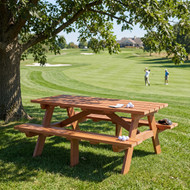
Ask any greenkeeper about the timber on their course and you'll hear the same story. The benches that looked handsome three seasons ago are greying and splitting. The tee signs need sanding and restaining before the club championship. A post has rotted at ground level and now leans at an angle that no amount of packing will fix.
Wood is beautiful, and it is also temporary. Every timber item on a course sits somewhere on a countdown towards replacement, and every year of that countdown costs money in labour, materials and eventual capital spend. For clubs under growing pressure to demonstrate environmental credentials, there is a second problem sitting alongside the first: replacing timber means consuming more timber.
This is the challenge Pinseeker set out to solve, and it is why a golf course equipment manufacturer in Cheshire now spends a good deal of its time thinking about plastic waste.
Two problems, one answer
Back in February 2019, we started looking seriously at plastic reduction. The thinking behind it was simple enough. Golf courses needed outdoor furniture and equipment that could survive British and European weather without constant attention. Meanwhile, the world had an enormous volume of used plastic with nowhere useful to go.
Those two problems turned out to fit together rather neatly. The result was Luxewood®, a material made entirely from post-consumer HDPE that we now use across a growing share of our range. As of January 2026, around 40 per cent of Pinseeker products include recycled materials in their design.
Our particular focus is ocean-bound plastic, meaning waste recovered before it reaches the sea rather than fished out afterwards. Intercepting it at that point is both more practical and more effective, and it turns a genuine environmental liability into something a golf course can actually use.
From waste stream to finished bench
Recycled plastic has an image problem, largely because a lot of it deserves one. Understanding how the material is made explains why quality varies so widely, and why not all recycled plastic belongs on a golf course.
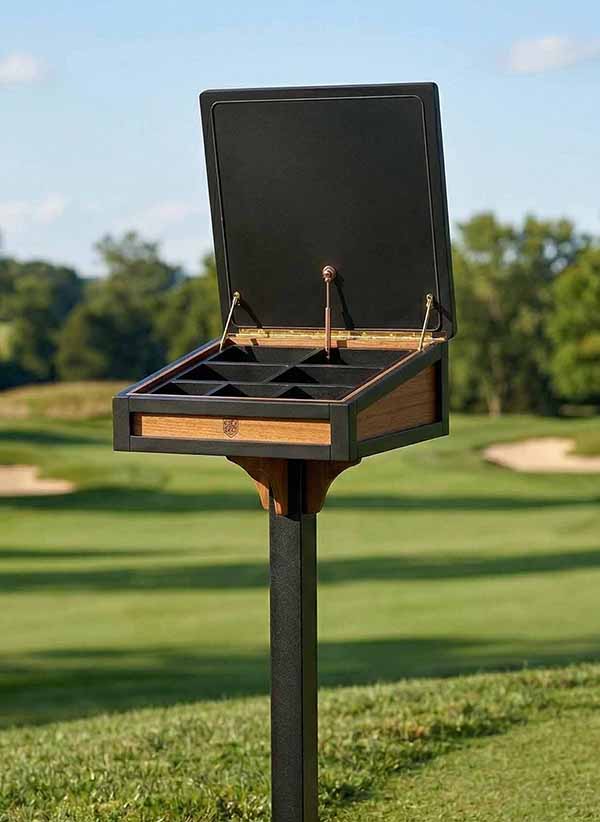
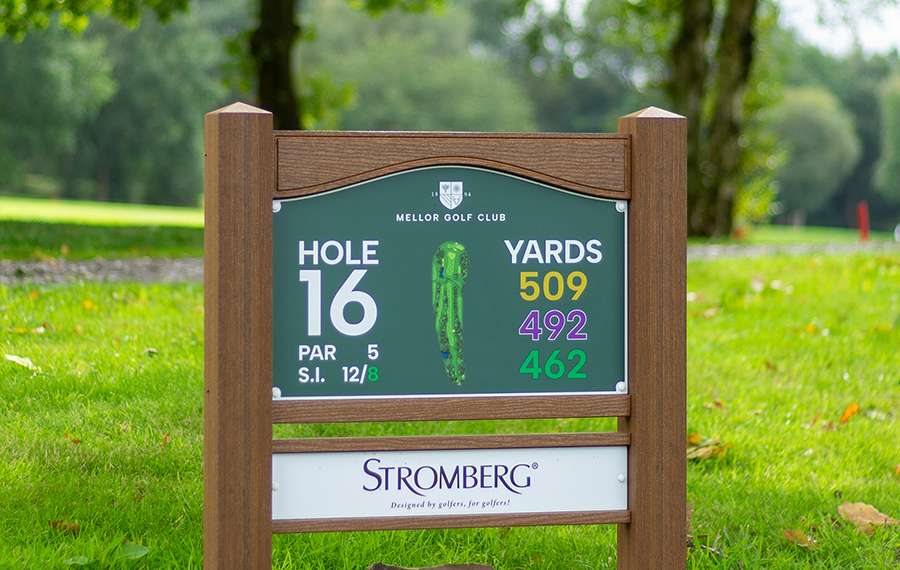
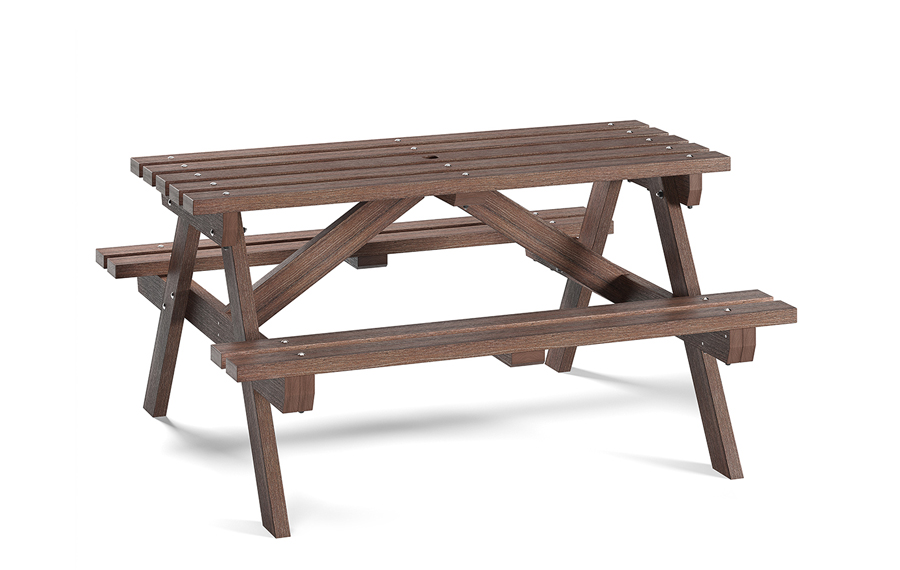
The process runs broadly like this.
Collection and recovery. Post-consumer plastic is gathered from waste streams, including coastal and near-shore areas where it would otherwise wash into the ocean. This is the point at which the environmental benefit is created or lost.
Sorting. Different polymers behave very differently when heated, so the material is separated by type. HDPE, the plastic used in milk bottles, detergent containers and pipework, is prized for outdoor applications because it is dense, chemically stable and does not absorb water.
Shredding and washing. The sorted plastic is broken down into flake and cleaned to strip out labels, adhesives, food residue and general contamination. Thoroughness here determines almost everything about the finished product.
Compounding and moulding. The clean flake is melted, colour is added through the full thickness of the material rather than applied to the surface, and the mix is formed into solid profiles that can be cut, drilled and machined much like timber.
That fourth stage is where the difference between grades of recycled plastic becomes obvious. Cheaper materials are bulked out with fillers and mixed polymers, which leaves them porous. Porous plastic absorbs moisture, and moisture brings mould, discolouration, swelling and odour, along with the risk of contaminants leaching into the ground beneath. Buy poorly and you have simply swapped rotting wood for rotting plastic.
Luxewood® contains no fillers. It is pure HDPE, which is precisely why it stays inert in the ground and stable in the sun.
What it means once it's out on the course
The practical case is easier to make than the environmental one, because it shows up in the maintenance diary.
Luxewood® will not warp, splinter, crack or rot. There is no surface finish to repaint or restain, because the colour runs all the way through. Cleaning is a bucket of soapy water. It holds up to UV and weather in climates from northern Europe to considerably harsher, and the weathered wood-effect finishes are difficult to distinguish from natural timber at a few paces.
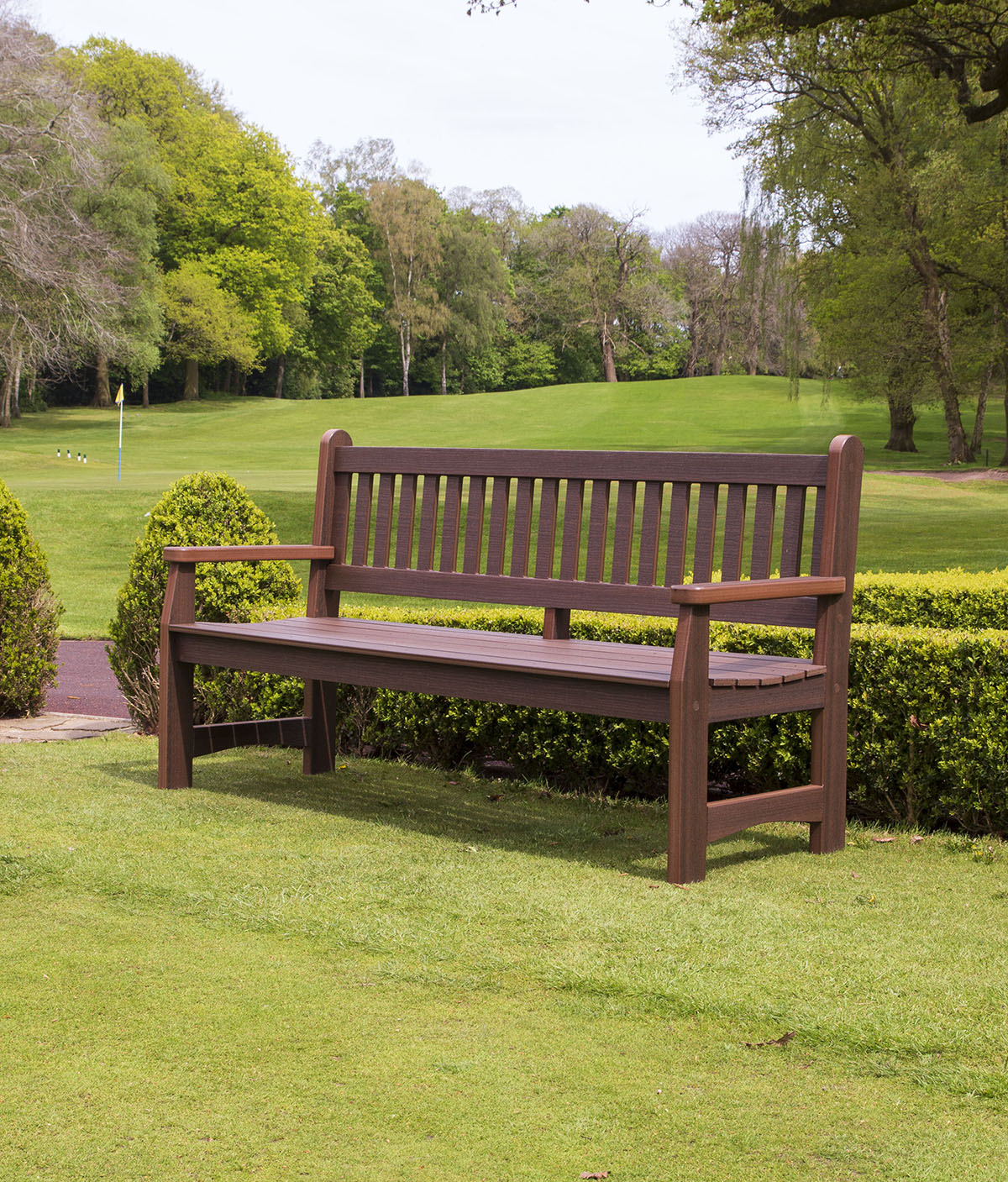
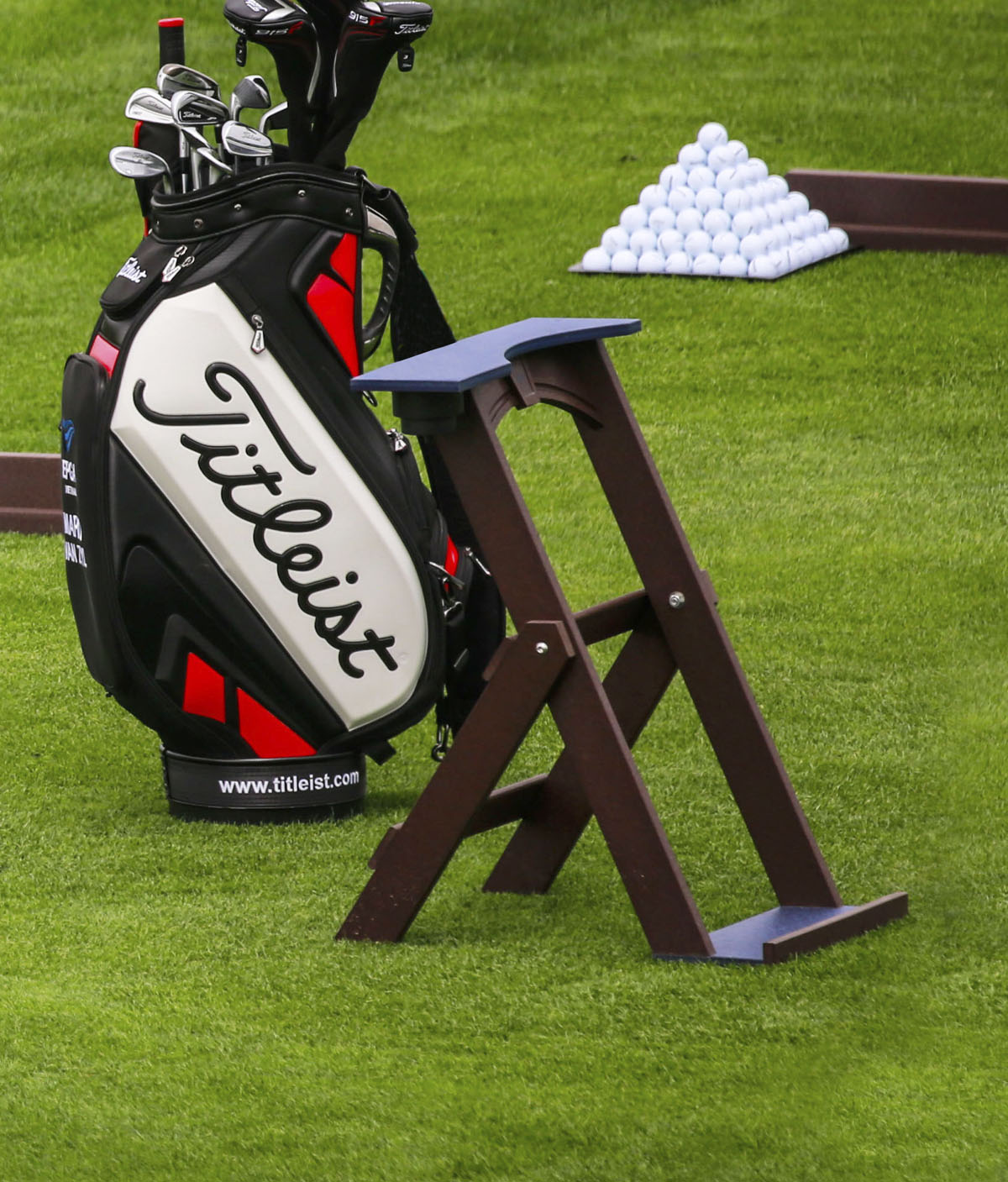
For a course, that translates into staff hours released from painting and repair, a capital replacement cycle that stretches out substantially, and a course that looks consistent in year eight rather than tired. Luxewood® products carry up to a 5 year commercial limited warranty, which is our way of saying we expect them to still be doing their job long after the timber they replaced would have needed pulling out.
It is also worth saying plainly what the material is not. Luxewood® suits posts, panels, benches, tables, bins, tee markers, path markers, ball washers, bay dividers and signage. It does not replace steel or aluminium where those materials do a job better, and we would not pretend otherwise. Sustainability claims stop being useful the moment they stop being accurate.
The wider picture
Materials are only one part of what a course can do, which is why recycled products sit alongside two other commitments for us: helping owners and operators understand the practices that improve both environmental performance and running costs, and giving greenkeepers the resources to put those practices into daily use.
Nobody expects a club to transform its environmental footprint in a season. But the next time a bench needs replacing, or a set of tee signs is looking past its best, there is a choice available that costs less over its life, asks less of your staff and keeps a quantity of plastic out of the ocean.
That seems a reasonable place to start.
Want to understand more about where our materials come from and where we're heading? Read about our sustainability mission.